🇪🇺 Fast delivery (3–5 working days) with GLS ✅ Card or bank transfer 📦 Free shipping from €50

Peptides: what they are, how they work, main categories and safety profile
Peptides are short chains of amino acids that act as signals in the body — they bind to specific receptors and "tell" cells what to do (metabolism, regeneration, immune response, pigmentation, etc.). In practice this allows very precise targeting: from appetite and glucose control (GLP-1/amylin peptides) to stimulation of the GH axis (GHRH/GHRP), accelerated tissue regeneration (BPC-157/TB-500), neuro-support (Semax/Selank) and more. Some molecules have substantial clinical data and pharmaceutical forms (e.g. semaglutide/tirzepatide/tesamorelin), while others are experimental and available only for research — with important regulatory and ethical restrictions. In all cases safety and quality are critical (see the "Safety" section below).
Peptides: what they are, how they work, main categories and safety profile
Peptology · 2026-06-04

In brief
Peptides are short chains of amino acids that act as signals in the body — they bind to specific receptors and "tell" cells what to do (metabolism, regeneration, immune response, pigmentation, etc.). In practice this allows very precise targeting: from appetite and glucose control (GLP-1/amylin peptides) to stimulation of the GH axis (GHRH/GHRP), accelerated tissue regeneration (BPC-157/TB-500), neuro-support (Semax/Selank) and more. Some molecules have substantial clinical data and pharmaceutical forms (e.g. semaglutide/tirzepatide/tesamorelin), while others are experimental and available only for research — with important regulatory and ethical restrictions. In all cases safety and quality are critical (see the "Safety" section below).
What are peptides?
Peptides are short chains of amino acids (typically 2–50 AAs), whereas proteins are long and often adopt complex 3D structures. In the human body dozens of hormones and mediators are peptides (GLP-1, GHRH, amylin, etc.). When synthetic analogues bind to the relevant receptors they trigger the same intracellular pathways — which is why clinical effects can be potent and specific.
How "they work": peptide → receptor → signaling → physiological effect (e.g. GLP-1 → suppressed appetite, improved glucose control; GHRH/GHRP → pulsatile GH release; α-MSH analogues → pigmentation).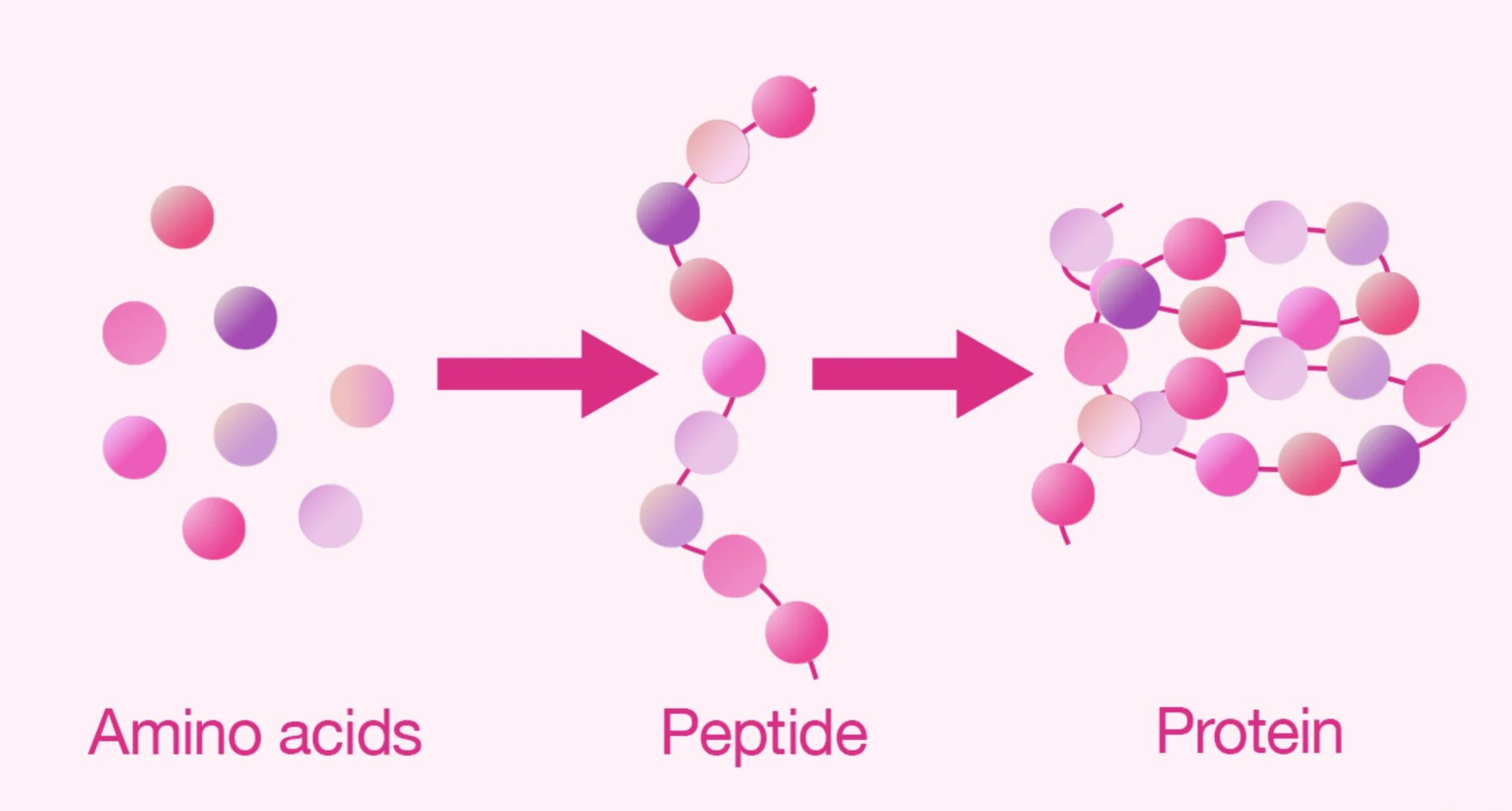
Main peptide categories
1) Metabolic and appetite-regulating peptides (GLP-1/incretins and amylin)
-
Semaglutide 5 mg (GLP-1 RA) — long-acting GLP-1 agonist (once-weekly dosing in clinical trials). In publications the most common adverse reactions are GI symptoms (nausea, diarrhea/constipation), usually mild to moderate.
-
Tirzepatide 5 mg (GLP-1/GIP dual agonist) — shows greater weight reduction vs. semaglutide in head-to-head trials; the adverse event profile is similar (GI-related, mostly mild/moderate).
-
Retatrutide 5 mg (GLP-1/GIP/GCGR triple agonist) — the next generation incretin peptide with triple targeting; still experimental.
-
Cagrilintide 5 mg (amylin analogue) — suppresses appetite, delays gastric emptying; also being studied in combination with semaglutide, where GI AEs occur more frequently but are mainly mild/moderate.
-
CS10 (Cagrilintide + Semaglutide) — a ready combination in the catalogue for research purposes.
2) GH-axis peptides: GHRH analogues, GHRP/secretagogues and GH itself
-
CJC-1295 without DAC 5 mg (GHRH analogue) — enhances pulsatile GH/IGF-1 release; synergistic with GHRP.
-
Ipamorelin 5 mg (selective GHRP/secretagogue) — stimulates GH without raising cortisol/prolactin (advantage over GHRP-6/2).
-
Tesamorelin 10 mg (GHRH analogue) — studied in clinical trials for visceral fat in HIV-associated lipodystrophy; available in the catalogue for research.
-
Somatropin (HGH, 10–36 IU) — recombinant human growth hormone (191 AAs).
3) Regeneration, recovery and skin
-
BPC-157 (5–10 mg) — often combined with TB-500 (Thymosin-β4 fragment) in formulations such as BB10/BB20 and GLOW50/GLOW70 (the latter add GHK-Cu for skin/collagen). Important for athletes: BPC-157 and TB-500 are included in WADA bans (see "Safety").
-
GHK-Cu 100 mg (copper tripeptide) — regeneration/anti-aging, collagen.
4) Neuropeptides and nootropics
-
Semax 5 mg — an ACTH(4-7)-derived peptide; literature describes a neuroprotective/nootropic profile, but with limited English-language clinical data.
-
Selank 5 mg — anxiolytic/nootropic peptide; publications report effects comparable to low-dose benzodiazepines but without typical sedative/muscle-relaxant effects; larger international trials are still needed.
5) Pigmentation, photoprotection and libido (melanocortins)
-
Melanotan I (MT-1) 10 mg and Melanotan II (MT-2) 10 mg — α-MSH analogues (MC1R/MC4R). Regulatory warning (the EU): injectable forms of melanotan are considered illegal/unregulated; there are risks and guidance is to avoid them.
-
PT-141 (Bremelanotide) 10 mg — acts at MC3R/MC4R; differs from vasoactive ED drugs (acts centrally).
6) Immune and hormonal regulators (GnRH/Kisspeptin/Thymus)
-
Kisspeptin-10 5 mg and Gonadorelin 2 mg (GnRH agonist) — regulators of the HPG axis (LH/FSH/testosterone).
-
Thymosin Alpha-1 5 mg and Thymulin 5 mg — immunomodulatory peptides.
-
HCG 5000 IU — technically a glycoprotein hormone, but included in the catalogue in the same section as "peptide regulators"; activates LH receptors (fertility/androgens).
How peptides act (mechanism in brief)
-
Receptor binding (GLP-1R, MC1R/MC4R, GHRH-R, GHS-R, amylin receptors, etc.).
-
Signaling (cAMP/PKA, MAPK/ERK, Pi3K/AKT etc.) → "translation" of the signal inside the cell.
-
Physiological response — suppressed appetite, improved glucose control, GH pulsatility, neoangiogenesis/tissue remodeling, changes in pigmentation, modulation of neurotransmitters, and more.
Safety: what is important to know (general profile)
1) Regulatory status and product quality
-
Some molecules have pharmaceutical forms for specific indications (e.g. semaglutide/tirzepatide; tesamorelin), while others are experimental and often offered "for research". The US FDA explicitly warns against unauthorized versions, including products mislabelled as "for research only", due to unknown quality and risk.
2) Typical class-specific AEs (selection of the best-studied classes)
-
GLP-1/incretins (semaglutide/tirzepatide/retatrutide): the most common are gastrointestinal AEs (nausea, diarrhea/constipation, sometimes vomiting), usually mild to moderate and strongest during titration; combining with cagrilintide may increase the frequency of GI AEs.
-
GH-axis (GHRH/GHRP/GH): with overstimulation — risk of peripheral edema, carpal tunnel syndrome, changes in glucose tolerance; depends on dose/protocol (beyond the scope of this article). (General medical context.)
-
Melanocortins (MT-1/MT-2): regulators in the EU/other jurisdictions warn that injectable forms are illegal/unregulated and can be risky; AEs have been reported and safety is not guaranteed in unauthorized channels.
3) Anti-doping (important for athletes/competitors)
-
BPC-157, Thymosin-β4/TB-500, as well as several GH-related peptides and secretagogues, are listed on the WADA Prohibited List. Always check the current list (in force for 2025).
4) General hygiene and storage
-
Peptides are delicate molecules: purity, sterility, lyophilisate/solvent, cold chain and correct storage are key to quality and safety.
-
Never use products of unclear origin/label or those that imitate approved medicines without actually being such (see US FDA warnings).
Important: The information is for educational purposes and is not medical advice. Peptides (including research products) have class-specific risks and contraindications!
Frequently asked questions (FAQ)
Peptide ≠ protein — what is the difference?
Length and structure: peptides are short chains (signaling molecules), proteins are long and functionally more complex.
Can peptides be taken orally?
Most are degraded in the GI tract; therefore parenteral forms (injectable/intranasal) are often used. There are exceptions, but they require special formulations.
Why do GLP-1/incretins often cause nausea?
Receptor activation delays gastric emptying and centrally suppresses appetite — a mechanism that explains the typical GI AEs during titration.
Can athletes use BPC-157/TB-500?
No — they fall into WADA prohibited categories. Always check the current list.
Disclaimer
This material is for educational purposes only and does not replace medical consultation. The molecules described here have varying regulatory status; research products are not intended for human use. For any health-related decisions consult a physician/specialist.