🇪🇺 Fast delivery (3–5 working days) with GLS ✅ Card or bank transfer 📦 Free shipping from €50

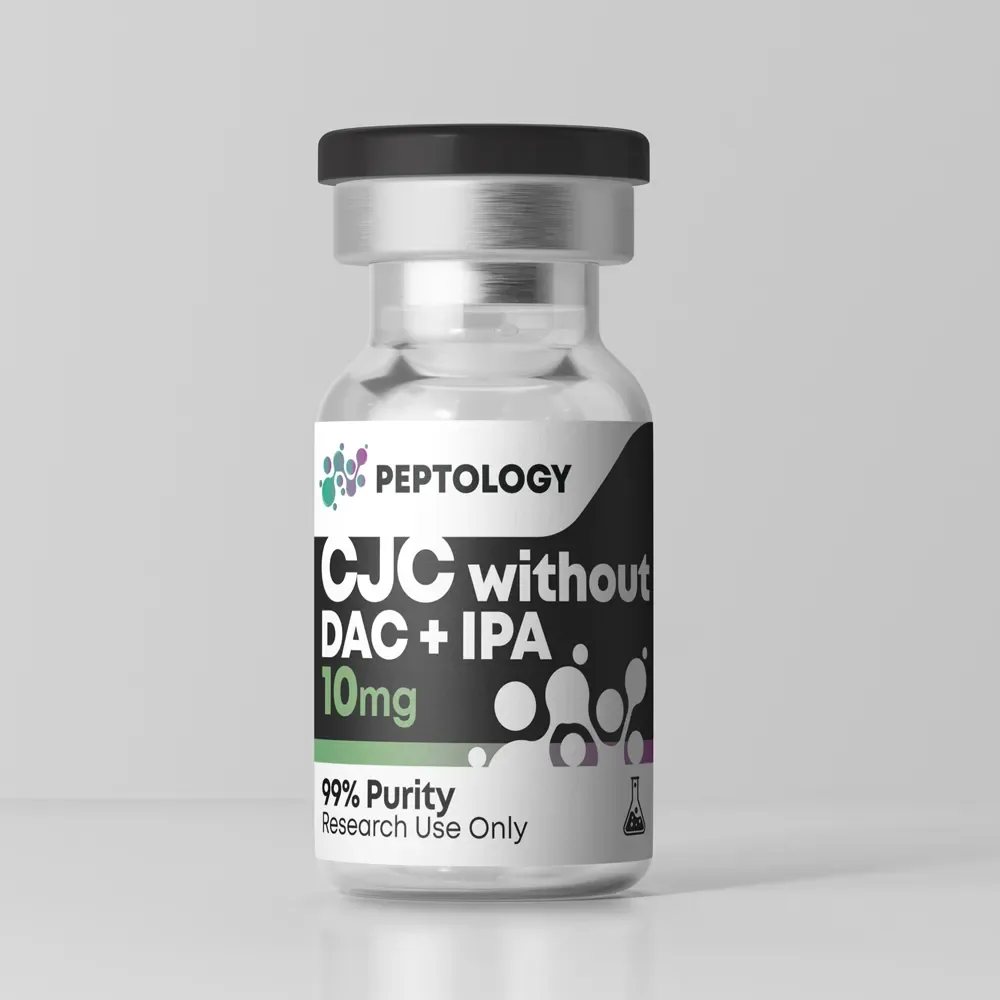
CJC-1295 + Ipamorelin
CJC-1295 without DAC 5 mg + Ipamorelin 5 mg – Combined GHRH + GH secretagogue complex
Peptology Ltd. · Recovery and anabolic peptides
CJC-1295 without DAC + Ipamorelin is a combination of two research peptides: a GHRH analogue (CJC-1295 without DAC) and a selective GH secretagogue (ipamorelin, ghrelin receptor agonist). Purity 99%+, HPLC/MS report for every batch.
📦 The product is in our EU warehouse – delivery within 3–5 working days.
59,00 € · In stock
For research use only / Not a medicine
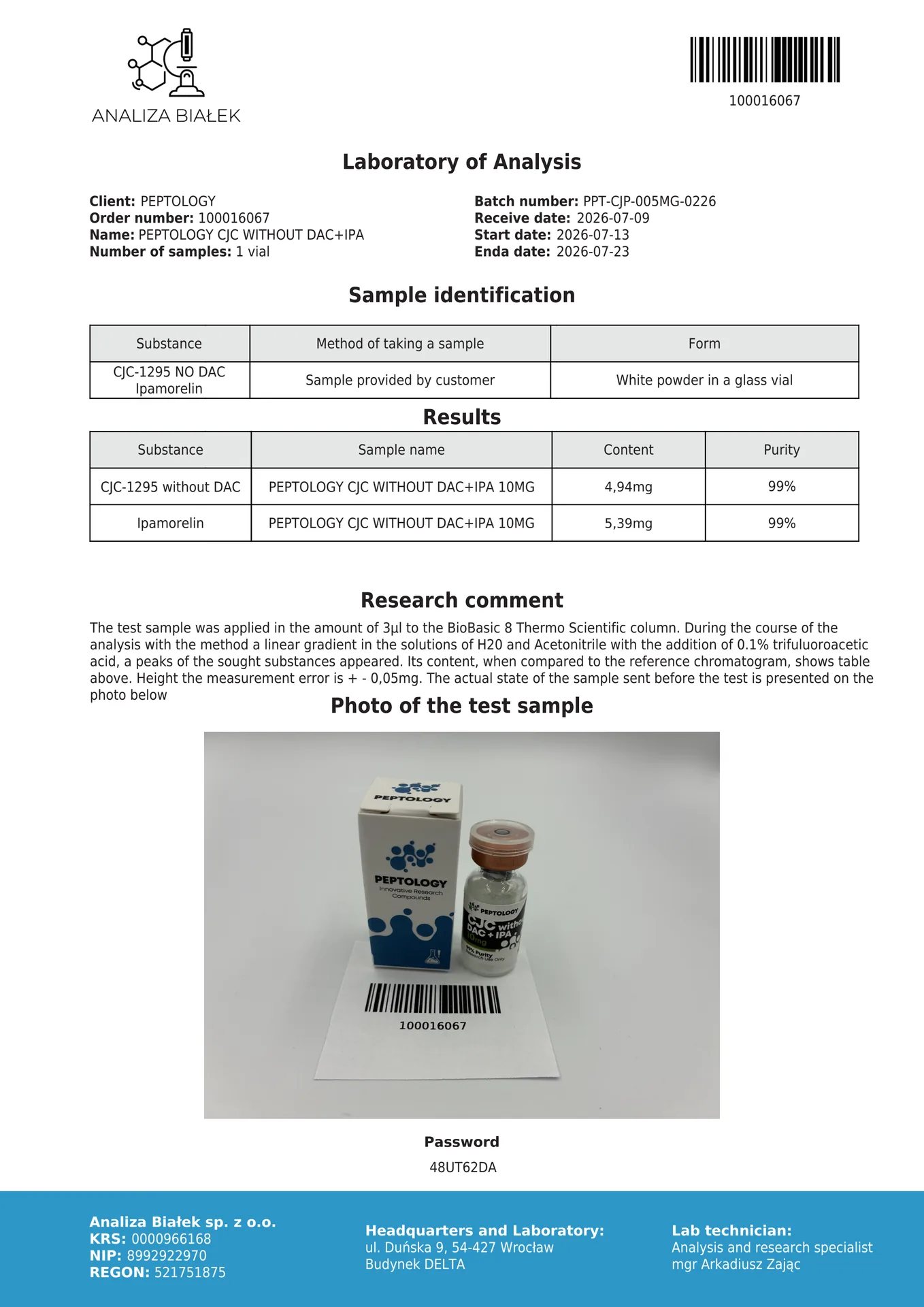
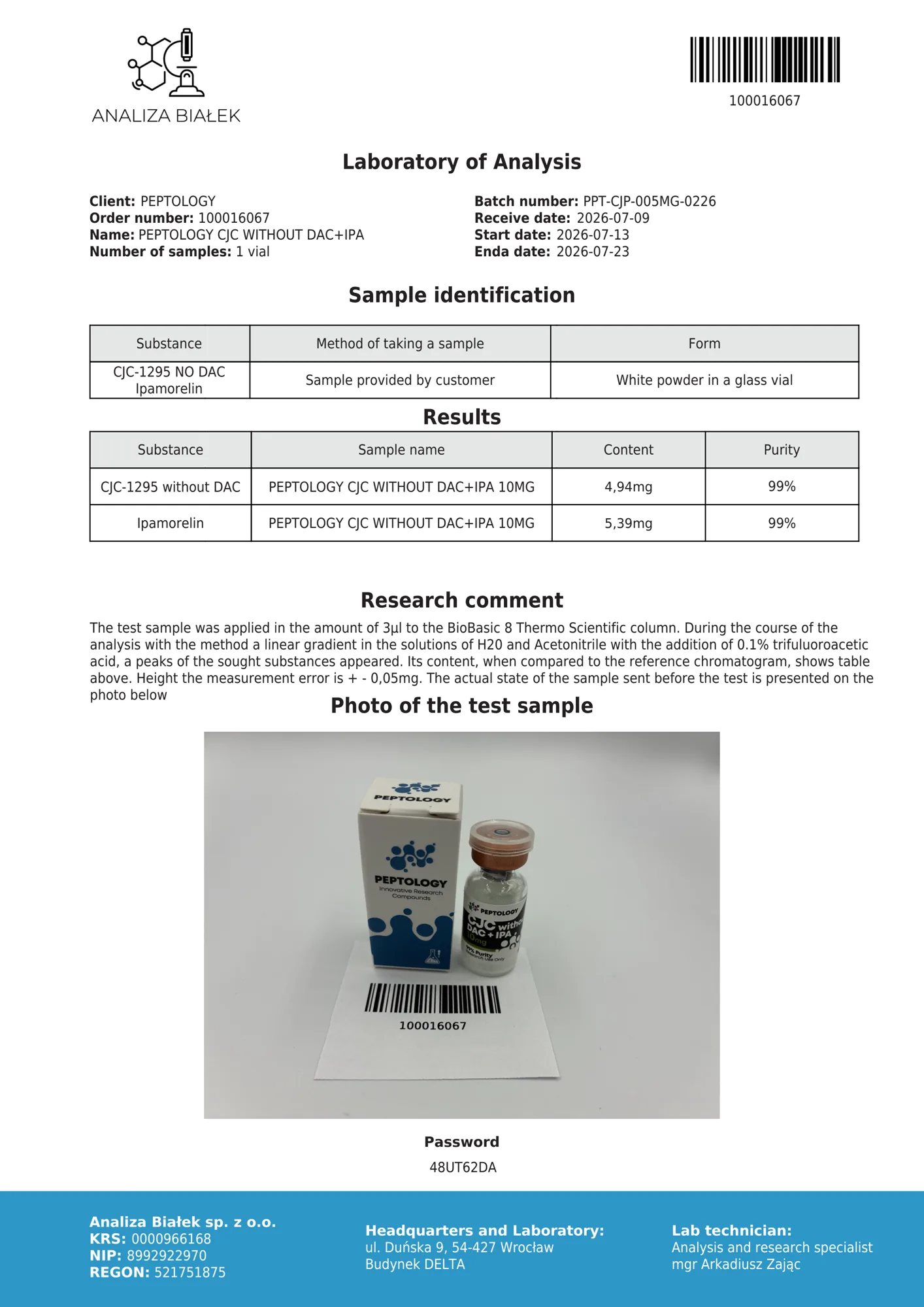
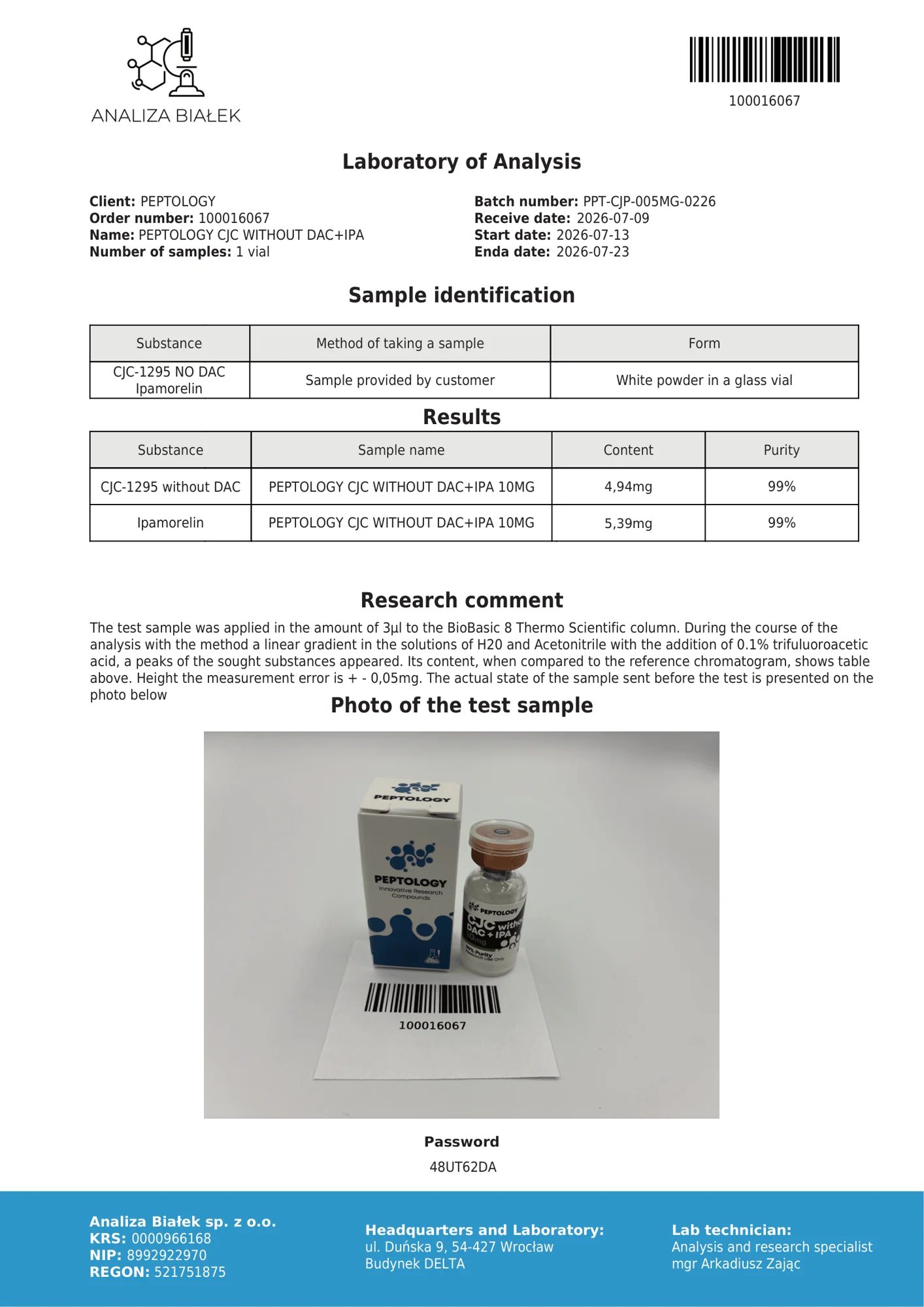
| Purity | >99% |
|---|---|
| Method | HPLC + LC/MS |
| Laboratory | Analiza Białek |
| Batch | 0226 |
Last updated: 23/07/2026
What is CJC-1295 without DAC + Ipamorelin?
CJC-1295 without DAC + Ipamorelin is a combined research peptide product that unites two molecules in a single vial which act on different receptors within the growth hormone axis. The first component — CJC-1295 without DAC (also known as Modified GRF 1–29, Mod GRF 1-29, tetra-substituted GRF(1–29)) — is a stabilized GHRH analogue that binds the GHRH receptor on pituitary somatotrophs. The second component — Ipamorelin — is a selective pentapeptide GH-secretagogue that acts on the ghrelin / GHS-R1a receptor. Both components are >99% pure and are supplied in a standard formulation as 5 mg per peptide per vial (10 mg total active mass).
Unlike a single GHRH analogue such as Sermorelin or a single GHRP, this combination uses the principle of dual-receptor synergy: the GHRH analogue increases the amplitude of GH pulses (more somatotrophs are recruited for release), while the GHRP increases the frequency and strength of the pulse itself. Mechanistic publications associate their combined application with GH release many times greater than either molecule alone at equivalent doses.
The CJC-1295 without DAC + Ipamorelin combination is one of the most studied peptide blends in the GH-secretagogue literature and is often recommended as a "reference stack" for researchers working on the GH/IGF-1 axis. It produces a physiological pulsatile profile — GH is released in acute peaks that mimic endogenous nocturnal secretion without prolonged basal elevation (unlike CJC-1295 with DAC). See also other peptides for muscle growth and recovery in our catalogue.
In the version supplied by Peptology, both components are delivered as lyophilized research peptides with purity over 99%, confirmed by an independent laboratory analysis for each batch. The product is intended for research and in vitro applications only and is not an approved medicinal product in any jurisdiction — neither in the US, nor in the EU, nor in Europe.
Vial composition: 5 mg + 5 mg
The combined vial contains equal amounts of both components — a format matching the most-cited research protocols in which the two peptides are administered at a 1:1 ratio.
5 MG CJC-1295 WITHOUT DAC
GHRH analogue — Mod GRF 1–29
Tetra-substituted GRF(1–29) fragment. Stabilized against DPP-IV; half-life ~30 minutes; stimulates pulsatile GH release via the GHRH receptor.
5 MG IPAMORELIN
Selective GHRP — pentapeptide
Selective agonist of the ghrelin / GHS-R1a receptor. Half-life ~2 hours; published data show no significant increase in ACTH, cortisol, or prolactin.
Both components are >99% pure (HPLC) with a batch certificate. For individual vials with larger or different pack sizes see CJC-1295 without DAC 5 mg and Ipamorelin 5 mg as separate products in the catalogue.
How the combination works — dual-receptor synergy
In clinical and preclinical publications the CJC-1295 without DAC + Ipamorelin combination is described by three concurrent pharmacological effects: activation of the GHRH receptor, activation of the GHS-R1a receptor and the resultant synergistic release of endogenous growth hormone. These three mechanisms operate in parallel — the GHRH signal primes somatotrophs for release, while the GHRP signal amplifies the amplitude of the pulse.
GHRH PATHWAY (CJC)
CJC-1295 without DAC binds GHRH-R on pituitary somatotrophs and activates adenylate cyclase → cAMP → protein kinase A — the classical stimulatory pathway for GH synthesis and pulsatile release.
GHRELIN PATHWAY (IPA)
Ipamorelin selectively binds GHS-R1a (the ghrelin receptor) and activates phospholipase C → IP3 / DAG → calcium mobilization — a GHRH-independent pathway that amplifies GH pulses and suppresses somatostatin.
SYNERGY
Mechanistic studies show that joint activation of both pathways is associated with GH release many times higher than each component alone — additive cAMP/Ca2+ signaling and enhanced somatotroph responsiveness.
Why this exact combination
CJC-1295 without DAC and Ipamorelin are not chosen at random — they represent the cleanest GHRH analogue + GHRP pair in the research literature. CJC-1295 without DAC has a half-life of ~30 minutes, allowing a physiological GH pulse without prolonged basal elevation (unlike CJC-1295 with DAC, whose half-life is days). Ipamorelin was the first described selective GHRP — published data show it does not elicit significant increases in ACTH, cortisol or prolactin, effects typical of older GHRP molecules such as GHRP-6 or Hexarelin, and it does not significantly stimulate appetite.
The result is a research stack with minimal hormonal "noise" — endogenous GH secretion is stimulated in a physiological pulsatile architecture without significant impact on related hormonal axes. These results come from controlled laboratory and clinical studies and do not guarantee individual outcomes or constitute a claim for the action of a research-grade product.
Pharmacokinetics of the two components
The two components have similarly short but complementary PK profiles — characteristics that explain why the combination is used as a daily, rather than weekly, regimen.
| Parameter | CJC-1295 without DAC | Ipamorelin |
|---|---|---|
| Class | GHRH analogue | Selective GHRP |
| Receptor | GHRH-R | GHS-R1a (ghrelin) |
| Molecular weight | ~3367 Da (29 AA) | ~712 Da (5 AA) |
| Biological half-life | ~30 min | ~2 hours |
| Tmax (PK) | 15–30 minutes | 20–30 minutes |
| GH peak | ~30–45 minutes after SC | ~30–45 minutes after SC |
| Cortisol / prolactin | No significant effect | No significant effect |
| Metabolism | Plasma peptidases | Plasma peptidases; renal clearance |
The PK profiles are mutually aligned — both molecules reach peak and induce GH release in a close time window (~30–45 minutes after SC), which is why the two components are usually administered simultaneously in the same injection moment.
The combination versus single components and CJC-1295 with DAC
The table below compares the mixed protocol with three relevant alternatives: CJC-1295 without DAC alone, Ipamorelin alone and the long-acting CJC-1295 with DAC. The aim is to show how dual-receptor synergy differs from a single molecule or a different stabilization approach. Data are for scientific reference and do not represent a direct head-to-head clinical comparison.
| CJC + IPA (blend) | CJC alone | IPA alone | CJC with DAC | |
|---|---|---|---|---|
| Activated receptors | GHRH-R + GHS-R1a | GHRH-R | GHS-R1a | GHRH-R (prolonged) |
| GH architecture | Enhanced physiological pulse | Moderate pulse | Moderate pulse | Basal elevation + pulse |
| Half-life | ~30 min + ~2 h | ~30 minutes | ~2 hours | ~6–8 days |
| Studied regimen | Daily SC, usually evening | Daily SC | Daily SC | Weekly SC |
| Axis feedback | Preserved | Preserved | Preserved | Partially suppressed (prolonged signal) |
| Cortisol / prolactin | No significant effect | No significant effect | No significant effect | No significant effect |
| Primary studied effect | Synergistically enhanced GH/IGF-1 | Moderate GH peak | Moderate GH peak | Sustained IGF-1 elevation |
Sources: Teichman et al. J Clin Endocrinol Metab 91(3):799–805 (2006) for CJC PK data; Raun et al. (1998) for the original description of Ipamorelin as a selective GHRP; review summaries of GHRH+GHRP synergy in the endocrinology literature. Presented data are from different clinical and research programmes and should not be interpreted as a direct comparison or as a claim for effect of a specific research-grade product.
Research and clinical context
The CJC-1295 without DAC + Ipamorelin combination itself has not been the subject of a regulatory Phase 3 clinical programme as a fixed product. What exists in the literature are (a) clinical PK/PD data for each component separately, (b) mechanistic studies of GHRH + GHRP synergy and (c) clinically-applied observations. Below are summaries of the most-cited references.
Teichman et al., 2006 — CJC-1295 without DAC PK
Published in The Journal of Clinical Endocrinology & Metabolism, the study documents a short systemic half-life for the tetra-substituted GRF(1–29) sequence (~30 minutes), predictable dose proportionality and physiologic pulsatile GH release in response to a single SC dose. This is the primary source for PK of the non-DAC modified version and explains why it is dosed daily rather than weekly.
Raun et al., 1998 — Ipamorelin as the first selective GHRP
The original Ipamorelin publication (Raun et al.) describes the pentapeptide molecule as "the first selective GH-secretagogue" — with confirmed GH-releasing effects in animal and in vitro models without significant effects on ACTH, cortisol or prolactin. This distinguishes Ipamorelin from older GHRPs such as GHRP-6 (which strongly increases appetite and cortisol) and Hexarelin (which increases prolactin).
GHRH + GHRP synergy — mechanistic literature
Endocrinology literature documents that co-administration of a GHRH analogue and a GHRP agent leads to GH release many times higher (commonly cited in the range 6–10×) than either molecule alone at equivalent doses. The mechanistic explanation is that the GHRH signal (cAMP pathway) and the GHRP signal (PLC / Ca2+ pathway) are independent and additive at the somatotroph level, and that GHRP increases somatotroph sensitivity to the GHRH signal. This synergy has been validated in adults and in patients with GH deficiency in older endocrinology studies.
Ipamorelin Phase 2 — postoperative ileus
The most-cited randomized controlled Phase 2 trial of Ipamorelin (n=87) tested the molecule for postoperative ileus after bowel resection. The study did not meet its primary endpoints and the programme was discontinued, but the safety data from the trial remain an important reference for Ipamorelin tolerability in short clinical courses.
Note: Information on clinical and mechanistic studies is provided for scientific reference and is based on published results. It does not constitute medical advice, a recommendation for use, or a claim for effect of the product supplied by Peptology.
Documented results in the literature
- Dual receptor activation — simultaneous stimulation of GHRH-R and GHS-R1a for a synergistic GH effect
- 6–10× higher GH release in mechanistic studies of GHRH + GHRP combinations versus single molecules
- Physiological pulsatile profile — GH is released in sharp peaks that mimic nocturnal endogenous secretion
- Preserved endogenous feedback — stimulates natural GH secretion without bypassing it (unlike exogenous rhGH)
- Selective GHRP component — Ipamorelin does not significantly increase ACTH, cortisol or prolactin in published data
- Tightly aligned time window — both components reach peak at ~30–45 minutes after SC, allowing a single injection for the dual effect
- Tolerability safety profile in published data for each component individually — mainly mild injection-site reactions
- The most-cited GH-secretagogue stack in the research literature for the GH/IGF-1 axis
All cited results refer to published clinical and mechanistic studies of the individual components and the GHRH + GHRP class combinations. They should not be interpreted as a promise of effect, usage instructions, or as a claim for action of the research-grade product supplied by Peptology.
Research dosing protocols
Important: The information below describes doses used in published research protocols of GHRH + GHRP combinations. It is provided for scientific reference and does not constitute a recommendation for individual use, medical advice, or application instructions. The research-grade product supplied by Peptology is not an approved medicinal product.
In research protocols for the GHRH + GHRP stack the two components are typically administered together in equal doses (1:1 ratio), in one or two injections per day. Commonly cited ranges are:
- Standard research range: 100–300 mcg of each component per injection, SC
- Commonly cited base protocol: 200 mcg CJC-1295 without DAC + 200 mcg Ipamorelin simultaneously, SC, usually in the evening before sleep (to coincide with the natural nocturnal GH peak)
- Frequency: 1–3 times daily in research models; in more conservative protocols 5 days on with 2 days off
- Weight-based adjustments: in smaller models — 100–150 mcg; in larger models — up to 300 mcg per component
- Timing window: administer at least 30 minutes before or after carbohydrate intake, since insulin and hyperglycaemia suppress GH release in published studies
- Cycle duration: research literature commonly uses 8–12 weeks followed by 2–4 weeks off to assess regression
Unlike incretin GLP-1 peptides such as Retatrutide, Semaglutide or Tirzepatide, the CJC + Ipamorelin combination does not require slow titration for gastrointestinal tolerability — the limiting factor is usually the sensitivity of the GH/IGF-1 axis and the desired pulse amplitude. These schemes are part of published scientific literature and do not represent a recommendation for independent use.
Side effects and safety
Published data for the two components individually describe a favourable safety profile for peptide candidates in the GHRH / GHRP classes. Predominant adverse reactions are local — at the site of subcutaneous administration. Systemic reactions are usually related to the pharmacodynamic GH effect (transient flushing, water retention), not to molecular toxicity.
Commonly observed in studies
- Injection-site reactions (redness, mild swelling)
- Transient facial flushing
- Mild headache in the first hours
- Transient drowsiness after an evening injection
Less frequently reported
- Mild nausea
- Transient water retention (GH-mediated)
- Numbness of fingers / mild carpal discomfort
- Mild hunger (weaker than GHRP-6, but possible at high Ipamorelin doses)
- Transient changes in blood glucose
Clinically observed risks
- Chronically elevated IGF-1 (theoretical long-term oncologic/proliferative risk)
- Worsening insulin resistance in predisposed models
- Allergic reaction (rare)
- Pronounced local inflammation with repeated injections at the same site
A feature of this combination is that both components have relatively short half-lives — adverse effects, if they occur, typically resolve within hours, unlike CJC-1295 with DAC, where an adverse reaction may persist for days due to the albumin reservoir. Rotation of the injection site is a standard recommendation in research protocols to reduce local reactions. This information is for scientific reference and is not an instruction for use.
Storage and reconstitution
The combined product is supplied as a lyophilized (freeze-dried) powder in a vial containing both components. In lyophilized form peptides are stable at low temperature, protected from light and moisture. After reconstitution stability depends on the solvent used, with Peptide Matrix Water™ significantly extending peptide lifetime compared to standard solvents.
- Before reconstitution: store at −20 °C for long-term stability or at 2–8 °C for short-term storage, in the original packaging, protected from light and moisture. Shelf life: up to 24 months if correctly stored frozen.
- After reconstitution with Peptide Matrix Water™: stability in the refrigerator 2–8 °C up to 60 days under appropriate laboratory conditions — the stabilizing formula extends peptide life versus standard solvents.
- After reconstitution with bacteriostatic or sterile water: stability in the refrigerator 2–8 °C up to 28 days under appropriate laboratory conditions. Do not refreeze reconstituted solution.
- Reconstitution: allow the vial to reach room temperature for about 15 minutes before adding solvent. Add the solvent slowly down the inner wall of the vial over 15–20 seconds — slow, wall-directed addition minimizes mechanical stress on the peptides.
- Concentration: with a total active mass of 10 mg (5 + 5 mg) commonly used working concentrations are 2 mg/mL total mass, depending on solvent volume and research objectives.
- Homogenization: gently rotate the vial; avoid vigorous shaking — peptide bonds are sensitive to mechanical stress.
Lab tip: when ordering you may add Peptide Matrix Water™ to the basket — a stabilizing solvent formulated for work with reconstituted research peptides. For context on choosing lyophilized vs ready-made forms see the article Lyophilized peptides vs ready-made solutions.
Frequently asked questions about the CJC + Ipamorelin combination
Why are the two peptides combined in one vial?
Because in research protocols they are administered simultaneously, in equal doses and at the same injection moment. Their PK profiles are aligned — both molecules reach peak at ~30 minutes after SC and induce GH release in a close time window. The combined vial removes the need for two separate reconstitutions and two separate injections, simplifying the research protocol and reducing variability between administrations.
How does it differ from CJC-1295 with DAC?
The two molecules share the tetra-substituted GRF(1–29) sequence, but CJC-1295 with DAC carries an additional maleimidopropionyl linker that binds covalently to serum albumin and extends half-life to ~6–8 days. CJC without DAC lacks this linker, has a half-life of ~30 minutes and elicits physiological pulsatile GH peaks. The non-DAC variant is used in this combination because the pulsatile architecture is more compatible with natural GH secretion and with a short-acting GHRP like Ipamorelin. For more context see the article CJC-1295 without vs with DAC — what’s the difference.
Why is the combination synergistic?
The two components activate different receptors via different intracellular pathways. CJC-1295 without DAC acts on GHRH-R via the cAMP pathway, while Ipamorelin acts on GHS-R1a (the ghrelin receptor) via the phospholipase C / Ca2+ pathway. Beyond being additive in the somatotroph, GHRP increases somatotroph responsiveness to GHRH. Mechanistic studies show GH release many times higher than a single component at equivalent doses.
Is the product approved by FDA or EMA?
No. Neither the individual components (CJC-1295 without DAC, Ipamorelin) nor the combination are approved medicinal products in any jurisdiction — neither in the US, nor in the EU, nor in Europe. The research-grade product supplied by Peptology is intended for research use only.
Why Ipamorelin and not GHRP-6 or Hexarelin?
Because Ipamorelin was the first described "selective" GHRP. Published data show it releases GH without significant effects on ACTH, cortisol, prolactin or appetite — effects that are prominent with older GHRPs (GHRP-6 strongly stimulates appetite and cortisol; Hexarelin increases prolactin). This selectivity makes Ipamorelin a preferred research partner for GHRH analogues in modern stack protocols.
Can it be combined with other peptides?
In the research literature the combination has been studied alongside downstream IGF molecules such as IGF-1 LR3 (systemic), as well as lipolytic GH fragments such as HGH Frag 176-191. These combinations are of scientific interest due to complementary mechanisms but have not been standardly investigated in Phase 3 controlled clinical settings. They remain research topics rather than usage recommendations.
Laboratory reconstitution
Laboratory protocol — reconstitution, research protocols, storage
Standardized protocol valid for all research peptides in the Peptology catalogue. To calculate the solution concentration (mg/mL) for each vial, use the peptide reconstitution calculator.
60-second protocol
1. SOLVENT
2. RECONSTITUTION
Add the solvent against the vial wall, do not shake, wait 10–15 minutes.
3. CALCULATION
Calculator → concentration mg/mL
4. STORAGE
+2 °C to +8 °C, up to 60 days with Peptide Matrix Water
Quick reference
| Parameter | Value |
|---|---|
| Form | Lyophilized powder |
| Solvent | Peptide Matrix Water |
| Volume for reconstitution | 1–3 mL — maximum 3 mL (capacity of a standard vial) |
| Storage before reconstitution | Room temperature, protected from direct light (refrigeration not required) |
| After reconstitution | Up to 60 days at +2 °C to +8 °C with Peptide Matrix Water |
What you need
Precision pipette
Calibrated, 100–1000 µL — for accurately measuring the volume of solvent added to the vial.
70% alcohol swabs
Two swabs — to disinfect the peptide vial and the solvent vial.
Stabilised solvent for lyophilized peptides. Why this one.
Five rules for reconstitution
| ✅ Correct | ❌ Incorrect |
|---|---|
| Disinfect the vial caps and the work surface with 70% alcohol; wear gloves | Working without disinfection |
| Add the solvent slowly against the vial wall | Direct jet onto the powder — foaming and denaturation |
| Gentle rolling between the palms | Shaking — foam that denatures peptides |
| 10–15 minutes wait at room temperature | Mechanical stirring or heating |
| Visual check: clear, particle-free | Working with cloudy or coloured solution |
Calculating concentration
⚠️ Maximum 3 mL solvent. The standard vial does not hold a larger volume — do not exceed when reconstituting.
- Concentration (mg/mL) = mg in the vial ÷ mL solvent
- Volume per sample (mL) = amount per sample (mg) ÷ concentration (mg/mL)
- 1 mg/mL = 1 µg/µL · 1 mL = 1000 µL
👉 For any vial and solvent volume — use the calculator. It calculates the concentration (mg/mL, µg/µL) and the volume per sample (mL, µL).
Storage
BEFORE RECONSTITUTION
Room temperature, protected from direct light, in original packaging. Refrigeration not required.
AFTER RECONSTITUTION
+2 °C to +8 °C, up to 60 days with Peptide Matrix Water. Discard any remainder after this period.
FREEZING
Not recommended. Freeze/thaw cycles degrade peptide structure.
Four mistakes to avoid
1. Shaking “to dissolve faster”
Foam = denaturation. Only gentle rolling between the palms.
2. Unsuitable solvent
For peptide stability use only a sterile, specially formulated solvent — recommended Peptide Matrix Water.
3. Ignoring slight cloudiness
Not fully clear = the sample does not meet criteria for use.
4. Removing from the refrigerator “for an hour–two”
Short periods out accumulate and compromise stability.
Research status: All products from Peptology are intended for laboratory and research use only. They are not medicinal products, are not approved for human or veterinary use and do not replace medical advice. The described protocol is standard laboratory practice for working with lyophilized peptides.
Shipping information
🚚 Shipping information
-
Products in our warehouse – orders placed by 15:00 on working days are dispatched the same day, later orders on the next working day.
-
Delivery with GLS to your address in 3–5 working days.
-
Shipping costs €5 and is free from €50.
Frequently Asked Questions (FAQ)
💡 Frequently asked questions about CJC-1295 without DAC + Ipamorelin
What is the difference between CJC-1295 without DAC and CJC-1295 with DAC?
This product contains CJC-1295 without DAC (also known as Mod GRF 1-29). Without the DAC (Drug Affinity Complex) the peptide does not bind to albumin, so its half-life is short – about 30 minutes – and it stimulates pulsatile GH release. The DAC version binds to albumin in the blood, which extends its half-life to about 6–8 days.
Why are CJC-1295 without DAC and Ipamorelin combined in one vial?
The two peptides act on different receptors of the growth hormone axis: CJC-1295 without DAC is a GHRH analogue that binds the GHRH receptor, while Ipamorelin is a selective GH secretagogue that acts on the ghrelin receptor (GHS-R1a). The 1:1 blend (5 mg + 5 mg) allows both mechanisms to be studied together in one research sample.
Is a prescription required to purchase?
The product is intended for research purposes and laboratory use only, therefore a prescription is not required to acquire it.
Where can I buy CJC-1295 + Ipamorelin in Europe and what does it cost?
You can buy CJC-1295 + Ipamorelin in Europe online from Peptology, from 59,00 €. Delivery with GLS in 3–5 working days. Shipping is free from 50,00 €. Payment by card. Purity 99%+, with an HPLC report for every batch.
Laboratory Analysis
CJC‑1295 without DAC 5 mg + Ipamorelin 5 mg - Batch - 0226 - Purity