
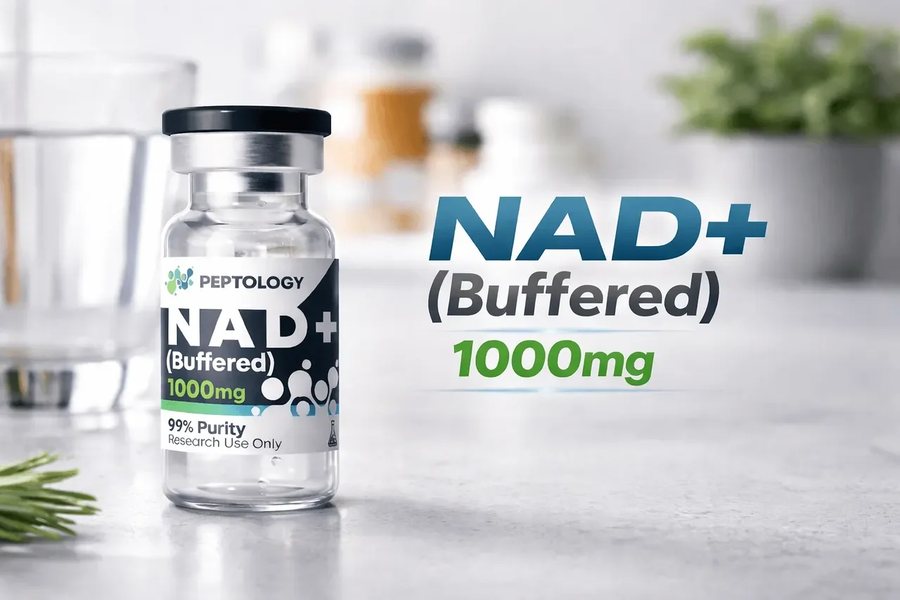
NAD+ (Buffered) 1000 mg – Cellular energy, DNA repair and mitochondrial support
A comprehensive scientific review of the longevity coenzyme: Mechanisms, synergy and application in modern regenerative medicine.
In the world of modern biotechnology few molecules attract as much interest as Nicotinamide Adenine Dinucleotide (NAD+). Often called the "molecule of life", this coenzyme is present in every living cell and is a critical factor for our survival. The issue facing modern humanity is a systemic NAD+ deficit that begins after the age of 30 and deepens with each decade.
NAD+ (Buffered) 1000 mg from Peptology in the EU represents a highly effective solution in a stable, buffered form designed for radical optimization of cellular metabolism. This article examines in detail why NAD+ is the fundamental element of any rejuvenation strategy.
1. Who is the ideal user of NAD+ 1000 mg?
To determine whether this product is suitable for your research objectives, you should recognize the symptoms of mitochondrial decline. NAD+ is not just a supplement; it is a metabolic "key".
„Burnout“ and chronic fatigue
If energy levels are low even after restorative sleep and you suffer from so-called "brain fog", your mitochondria are likely starving for fuel. NAD+ is the direct electron carrier that powers ATP (adenosine triphosphate) production.
Biohackers and anti-ageing enthusiasts
For people who monitor their biomarkers and aim to slow the biological clock, NAD+ is an essential element. It activates sirtuins – proteins that "clean" cellular waste and repair errors in the DNA code.
Additionally, athletes and people under systemic stress use NAD+ for faster recovery of muscle fibers and to reduce systemic inflammation caused by oxidative processes.
2. What is NAD+ (Buffered) used for?
The applications of NAD+ span a wide range of biological functions aimed at improving vitality:
- Mitochondrial biogenesis: Mitochondria are the "powerhouses" of the cell. NAD+ stimulates the creation of new mitochondria, which leads to increased physical endurance and mental clarity.
- Neuroprotection and cognitive health: The brain is the largest consumer of energy. Maintaining high levels of NAD+ protects neurons from degeneration and improves memory and focus.
- Regulation of circadian rhythms: Helps the body balance sleep–wake cycles via signaling to the biological clock.
- Metabolic restart: Improves insulin sensitivity and supports fat oxidation through activation of oxidative pathways.
3. Category: Peptides for cellular energy and regeneration
The NAD+ 1000 mg product occupies a central place in the specialized category Peptides for cellular energy and regeneration. While peptides like BPC-157 or TB-500 focus on structural repair, NAD+ acts as the "fuel" that allows those processes to occur. Without sufficient NAD+ levels, the cell cannot generate the energy required for regeneration.
4. Synergy: What can NAD+ be combined with?
One of the biggest advantages of NAD+ is its ability to enhance the effect of other research compounds:
- With BPC-157 and TB-500: While BB20 (BPC/TB complex) works on tissue building, NAD+ provides the energy for that process.
- With Epithalon: A powerful anti-ageing strategy – Epithalon extends telomeres, while NAD+ provides DNA repair and mitochondrial health.
- With Resveratrol or Quercetin: These compounds activate sirtuins, but NAD+ is the fuel without which they cannot function.
5. Advantages and disadvantages of the NAD+ series
- Direct action: Skips the need for metabolic conversion (unlike precursors).
- High stability: The buffered form ensures a long active shelf-life and pH balance.
- Format: 1000 mg of active substance in one vial.
- DNA protection: Activates PARP enzymes for genome repair after stress.
- Cold storage: Mandatory after reconstitution (2°C – 8°C).
- Route of administration: Oral absorption is ineffective; requires specific research protocols.
6. Comparison: NAD+ (Buffered) versus NMN and NR
Many users ask what the difference is between NAD+ and its precursors such as NMN (Nicotinamide Mononucleotide) and NR (Nicotinamide Riboside).
| Feature | NAD+ (Buffered) | NMN / NR (Precursors) |
|---|---|---|
| Speed of action | Immediate (direct coenzyme) | Slow (requires conversion in the body) |
| Efficacy | Highest for acute conditions and rapid restart | Good for long-term maintenance |
| Bioavailability | 100% (in direct research models) | Varies according to liver metabolism |
| Cost-effectiveness | 1000 mg per vial at Peptology | Often more expensive as an effective overall dose |
7. Why the buffered form?
Pure NAD+ is extremely unstable and degrades with changes in environmental acidity. The buffered variant from Peptology in the EU uses specific salts that maintain pH balance and protect the molecule from oxidation. This ensures researchers receive exactly 1000 mg of active, biologically available substance that does not convert into inert metabolites before reaching the cell.
8. Guidelines for research protocols
For optimal results in a research setting, follow these steps:
- Reconstitution: Use only bacteriostatic water. Add the liquid slowly down the inner wall of the vial.
- Homogenization: No vigorous shaking. Only gentle rotational movements until fully dissolved.
- Time of administration: Recommended use in the morning hours, as NAD+ increases energy and may interfere with sleep if applied late.
9. Conclusion
NAD+ (Buffered) 1000 mg is an indispensable tool for any research protocol focused on biohacking and cellular optimization. Aging is no longer seen as inevitable "wear and tear" but as a series of biochemical deficits that we can correct. With Peptology you receive verified purity and stability for your research.