
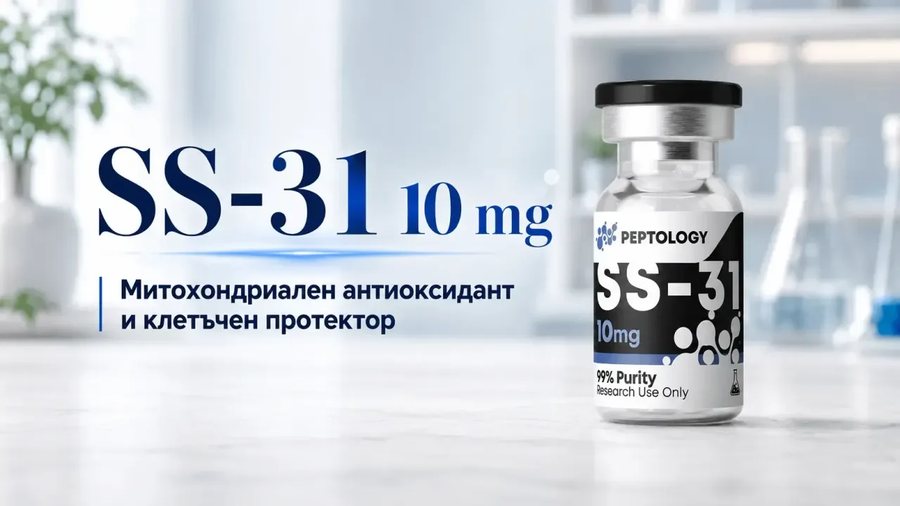
SS-31 (Elamipretide): The New Era in Mitochondrial Regeneration and Cellular Energy
In-depth analysis of the therapeutic potential of the peptide SS-31: How targeting cardiolipin in mitochondria restores ATP synthesis and why it outperforms traditional antioxidants.
Every biological process in the human body depends on the ability of cells to generate energy. With age, under stress and environmental toxins, this capacity progressively declines. At the core of this decline is mitochondrial dysfunction. When mitochondria – the "powerhouses" of the cell – are damaged, they stop producing sufficient adenosine triphosphate (ATP) and instead begin to release large amounts of free radicals. The innovative peptide SS-31 (Elamipretide) represents a radical breakthrough in biotechnology, as it acts directly within the inner mitochondrial membrane, repairing damage at a structural level.
1. Mechanism of action: The role of cardiolipin
Unlike conventional antioxidants that merely neutralize free radicals after they have left the mitochondria, SS-31 acts preventively and structurally. Its mechanism is linked to a unique interaction with cardiolipin – a specific phospholipid found exclusively in the inner mitochondrial membrane.
- Membrane stabilization: Cardiolipin is responsible for maintaining the structure of mitochondrial cristae. When it becomes oxidized, the structure collapses. SS-31 binds selectively to cardiolipin, preventing its peroxidation and permanent damage.
- Optimization of the electron transport chain: By protecting cardiolipin, the peptide restores the proper architecture of the cristae. This allows the protein complexes of the electron transport chain to operate in full synchrony, reducing electron leakage and maximizing energy yield.
2. Key benefits of SS-31 application
The focus of research interest in Elamipretide (SS-31) spans multiple body systems, due to the systemic nature of cellular energy:
Neuroprotection and cognitive function: The brain consumes about 20% of the body's total energy. Research shows that maintaining mitochondrial integrity with compounds like SS-31 peptide protects synapses from degeneration and improves memory in models of neurological aging. A dramatic reduction in neuroinflammation is also observed.
Cardioprotection and endurance: The heart muscle is the tissue richest in mitochondria. Optimizing ATP production helps the myocardium work more efficiently during ischemic events and supports rapid tissue recovery after intense physical exertion.
3. Products for cellular energy and regeneration
The SS-31 peptide occupies a central place in the specialized category Peptides for cellular energy and regeneration. This category brings together biotech products whose primary goal is not merely temporary masking of fatigue symptoms, but deep cellular renewal and rebooting of metabolic processes.
The same category also includes powerful synergists that work hand in hand with cellular renewal. To achieve optimal results in research, scientists often combine mitochondrial peptides with innovative solvent solutions. Unlike standard media, the use of high-tech products ensures long-term stability of amino acid chains. You can review available solutions from this class in the category Peptide solvents, where specialized storage media and precision tools are offered.
4. Restoration of ATP and cellular respiration
The process of generating energy in mitochondria can be likened to a complex assembly line. When the chain is disrupted, production stops. SS-31 acts like a manager who restores logistics within the cell itself:
Increase in ATP levels
By directly optimizing electron transfer, cells rapidly restore their baseline ATP levels. This leads to increased cellular vitality and resilience to external stressors.
Drastic reduction of ROS
ROS (Reactive Oxygen Species) are reactive forms of oxygen. As the chain operates correctly, the release of these harmful radicals decreases at source, halting intracellular destruction.
5. Advantages and disadvantages of SS-31
- Directly targets the source of cellular damage in the inner membrane.
- High bioavailability and rapid penetration through cellular barriers.
- Proven synergy with products from the Cellular energy section.
- Available at Peptology with a certificate for every batch.
- Requires extremely precise dosing and adherence to laboratory protocols.
- Sensitive to temperature shocks before full reconstitution.
- Standard oral antioxidants (CoQ10) are cheaper but lack its cellular permeability.
6. Table: SS-31 vs. Standard mitochondrial supplements
| Characteristic | SS-31 (Elamipretide) | Coenzyme Q10 (CoQ10) | Alpha-lipoic acid (ALA) |
|---|---|---|---|
| Targeting site | Inner membrane / Cardiolipin | General mitochondrial matrix | Cellular cytosol / Bloodstream |
| ATP effectiveness | Extremely high (direct repair) | Moderate (only in deficiency) | Indirect supportive role |
| Membrane penetration | Immediate and passive | Hindered (requires lipid carriers) | Limited by aqueous environment |
| Value / Quality | Professional grade | Low cost / Basic effect | Mass-market supplement |
7. The science behind mitochondrial regeneration
Numerous academic works confirm that oxidative stress alters the physical properties of membranes. When structure is distorted, the proteins responsible for energy transfer literally lose contact with each other. The SS-31 peptide molecule carries a unique net positive charge that is attracted to the highly negative charge of cardiolipin. This electrostatic attraction allows the peptide to wedge itself precisely where the membrane has begun to crack, acting like a molecular glue that stabilizes the lipid bilayer.
8. Guidelines for laboratory protocols and reconstitution
To achieve precise experimental results, follow the protocol below:
- Proper solvent addition: Use a high-quality bacteriostatic solvent from the Peptide solvents category. Inject the liquid slowly down the glass wall of the vial to avoid disturbing the integrity of the lyophilized powder.
- Do not shake: Never agitate the vial vigorously. Use gentle rotational movements until the solution clears completely.
- Storage: After reconstitution, store the peptide refrigerated at temperatures from 2°C to 8°C. Avoid direct sunlight and rapid temperature fluctuations.
Ensure precision and maximum purity for your research
Do not compromise on the quality of materials in your laboratory. Buy SS-31 online at Peptology.
Buy SS-31 peptide from Peptology9. Conclusion
All analyses and scientific data point to one conclusion: conventional methods for combating cellular aging and energy deficit pale in comparison to the precision of modern peptide therapy. The peptide SS-31 (Elamipretide) does not merely mask symptoms of fatigue, but regenerates the very foundation of cellular metabolism. We at Peptology strive to provide consistent quality for all your research and innovation projects in the field of cellular health.