🇪🇺 Fast delivery (3–5 working days) with GLS ✅ Card or bank transfer 📦 Free shipping from €50

🧬 Semaglutide – how the GLP-1 agonist works and what the studies show
Semaglutide is a synthetic analogue of GLP‑1 (glucagon‑like peptide‑1) with an ~weekly half‑life, designed to bind to albumin and thus be administered once weekly in its pharmaceutical forms. The molecule mimics endogenous GLP‑1 and activates GLP‑1 receptors (GLP‑1R) in the pancreas, gastrointestinal tract and brain.
🧬 Semaglutide – how the GLP-1 agonist works and what the studies show
Peptology · 2026-06-04

What is Semaglutide in brief
Semaglutide is a synthetic analogue of GLP‑1 (glucagon‑like peptide‑1) with an ~weekly half‑life, designed to bind to albumin and thus be administered once weekly in its pharmaceutical forms. The molecule mimics endogenous GLP‑1 and activates GLP‑1 receptors (GLP‑1R) in the pancreas, gastrointestinal tract and brain.
🧠 How Semaglutide works: 4 levels of effect
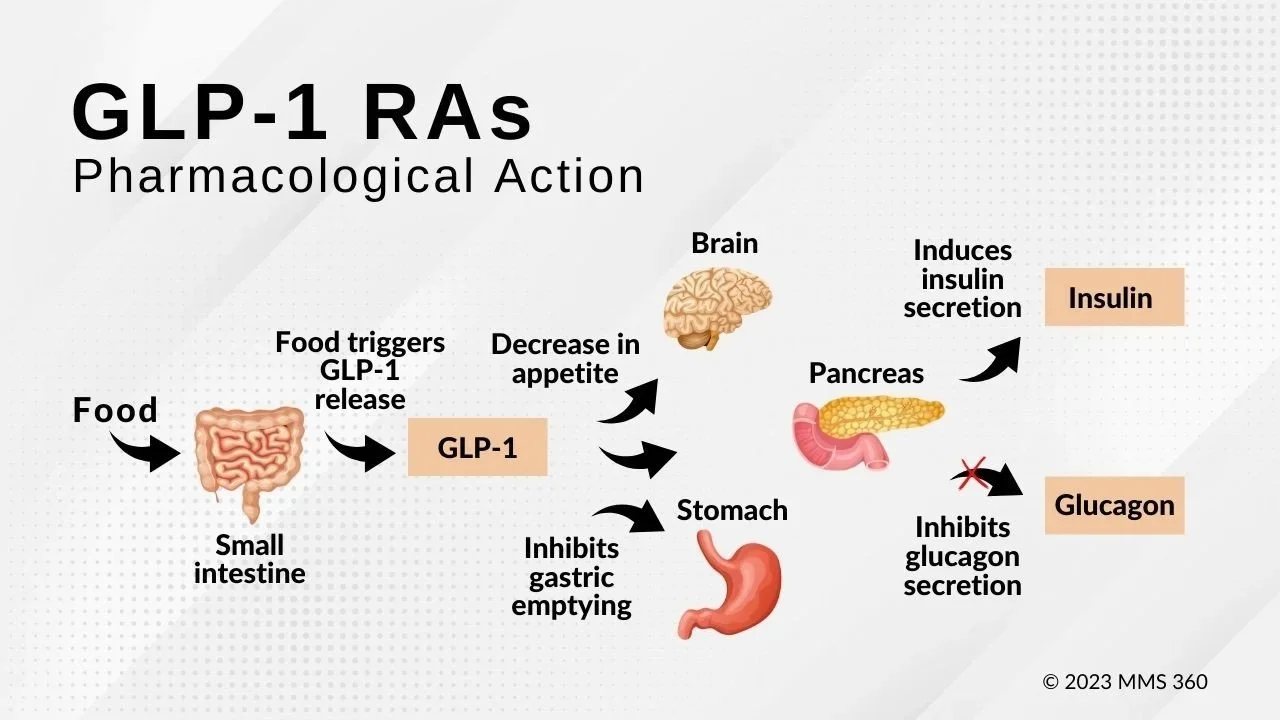
1) Pancreas – "smart" insulin secretion
Semaglutide activates GLP‑1R on β‑cells → enhances insulin secretion, but only when glucose is elevated. In parallel it suppresses glucagon from α‑cells. The result is a more stable glucose homeostasis and a lower risk of hypoglycaemia compared with insulin secretagogues without a glucose‑dependent mechanism.
2) Gastrointestinal tract – slower gastric emptying, longer satiety
Pharmaceutical formulations of semaglutide delay gastric emptying, which smooths the postprandial glucose peak and extends satiety. This supports a reduction in energy intake.
3) Central nervous system – appetite control
GLP‑1 receptors are present in the hypothalamus and other brain regions linked to appetite/reward. Semaglutide activates neuronal satiety pathways (POMC/CART) and suppresses orexigenic signals (AgRP/NPY); it additionally modulates the hedonic response to food. Effects may be mediated directly or via the vagus.
4) Pharmacological features – why it is weekly
The lipid side chain + albumin binding slow semaglutide clearance → t½ ≈ 1 week, a predictable profile and once‑weekly dosing. This improves adherence in therapeutic use.
🧩 Mechanism → effect: quick map
|
Site |
What GLP‑1 activation does |
Expected clinical signal* |
|---|---|---|
|
Pancreas (β/α) |
↑ insulin (glucose‑dependent), ↓ glucagon |
↓ fasting/postprandial glucose |
|
Stomach/intestine |
Delays gastric emptying |
Smaller portions, longer satiety |
|
Brain |
Suppresses appetite, influences reward |
↓ calorie intake |
|
PK/Form |
Albumin binding, t½ ~1 week |
Convenient once‑weekly dosing |
* signals described for the pharmaceutical formulations of semaglutide.
📊 What the published studies show
-
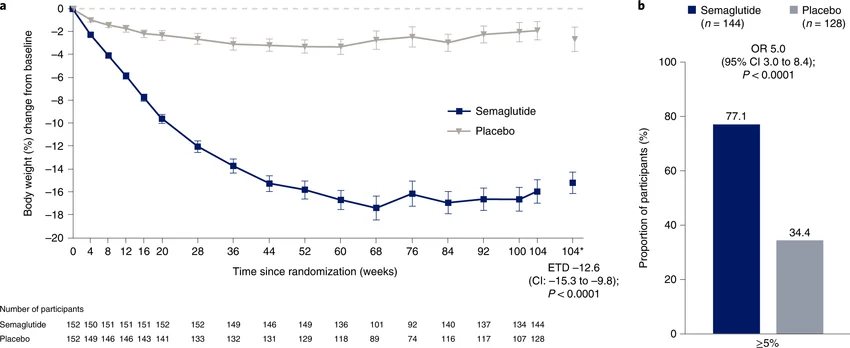
STEP‑1 (NEJM, 68 weeks): −14.9% mean weight reduction with 2.4 mg weekly + lifestyle modification vs −2.4% with placebo; ≥10% weight loss in 69% vs 12%.
-
STEP‑5 (2 years): improvements in weight, waist, HbA1c and blood pressure are sustained up to 104 weeks.
❓ Why GLP‑1 agonists lead to weight loss
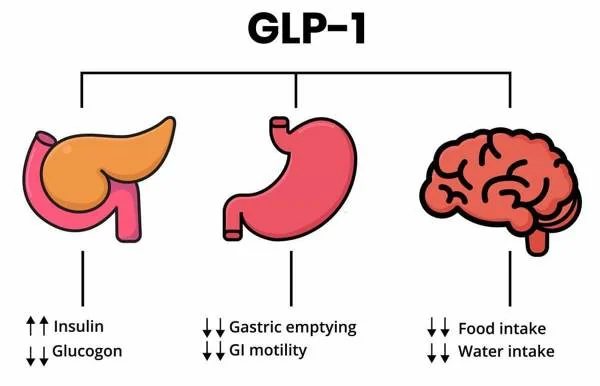
The combination of central appetite control + slower gastric emptying reduces overall calorie intake. The concurrent improvement in glycaemic control reduces hyperinsulinaemia and the "ravenous" hunger after sharp glycaemic fluctuations. Some reviews also discuss secondary effects on lipid metabolism and inflammation.
🧪 Why Semaglutide is convenient in research (pharmacological profile)
-
Predictable PK: long t½, linear exposure, stable concentration with weekly administration.
-
Albumin binding: prolongs circulation and reduces clearance.
⚠️ Adverse reactions
Most common: nausea, vomiting, diarrhoea/constipation, sometimes transient increased heart rate; rare signals: pancreatitis and others. These effects occur more frequently during initial titration and usually decrease with adaptation. Treatment decisions are entirely within the competence of a medical professional and according to the available product information.
📚 References
-
NEJM STEP‑1 and the editorial article – key results for 68 weeks.
-
Review in Signal Transduction and Targeted Therapy on GLP‑1R mechanisms.
-
Nature Medicine (STEP‑5): maintenance of effects up to 104 weeks.
✅ Conclusion
We hope you now understand in depth how semaglutide activates GLP‑1 receptors in the pancreas, stomach and brain, and thereby leads to stabilization of blood glucose, increased satiety and reduction of body mass. This multi‑layered function, combined with the predictable pharmacokinetic profile of once‑weekly administration, explains many of the observed outcomes with its therapeutic forms — such as weight reductions up to 15 % and a lasting effect several months after treatment initiation. For researchers this provides a platform to study a wide range of metabolic, neurological and endocrine interactions.